
In the back of Holding Patterns on a sunny Thursday in Leeds, Sam King of the eponymous Sam King & the Herons joined me to talk all things surrounding their music, their new single, their potential upcoming album, what music means to them and the spirituality they find in it.
Q. Firstly, the band name, why herons? Why not Sam King and the Kingfishers?
A. I think it was nothing complicated, to be honest. There’s quite a few Herons knocking about in Leeds, they’re such beautiful birds. A lot of the lyrics are about nature so we thought it might be nice to name the band after a bird, and this was the one that stuck.
We started chatting about giving the band a name because I think musically they do a lot of the lifting – so far I have written the song structures and lyrics and stuff but there are quite lengthy improvised instrumentals. They add a depth to the music I didn’t fully know was possible whilst writing the songs so it made sense for them to be acknowledged in the name. I still do all the admin though so my name has to be on there. Maybe it will become just the Herons one day if they start sending the invoices.
Q.I mean it was quite a nature based name isn’t it? Is nature something you consider in your songs, especially being a city based band?
A. Yeah, definitely. But more in a way where I don’t really consider humanity and nature to be separate from each other, to be honest. It’s vital to speak about nature, because we are nature.
Q: I mean, thinking of being kind of a city based band, you know, Leeds for being a big city has a surprisingly vibrant folk scene.
A: I moved to Leeds about 6 years ago now and I’ve met loads of interesting people who I love very dearly who have completely changed the way I think about things. I feel really well connected here, and even though I’m a bit awkward it feels really easy to make new friends which is nice. It feels like you’re always just around the corner from being introduced to a new person or a new idea or new book that might change the way you think about things. This has influenced my writing loads in a fundamental way.
And yeah the folk scene here is great. There’s always great sessions on, I love the Chemic Tavern folk session and open mic, and there’s a great folk open mic at the Grove Inn. There’s also plenty of fantastic folk artists in Leeds at the moment, I really like Rhiannon Hope, Fairmaiden and Rykener.
Q. On recording, the single is out, album on the way?
A. Yeah, we’ve recorded one. Well we’ve recorded enough material to do an album, whether we actually release it that way or not, I’m not 100% sure. And it’s still early doors, but we definitely have the aspiration to do that. To me, recording feels like the tactile, grounded part of the craft, where writing feels more like the spiritual side. Recording with Evan J Martin is such a joy – I think he has a good understanding of this. He’s very present, and always seems to know what’s needed and what isn’t.
Q. Do you think being on Regcords has helped?
A. Big time. Having Regcords backing us and putting us on really good shows and stuff, that has been massive. They have made me take it a lot more seriously – spiritually I view music as my vocation now, even if I’m not making a living from it, and Regcords has played such a big part in that. The fact that they put so much work into something just out of sheer love for music and for the place they live, and for it to not be about money at all, is a beautiful thing.
Q. Is that also a key part of being on Regcords, that communal support?
A. It does feel like it is building community around it, yeah. This is exciting and it’s lovely to see. It’s important to me that it’s local, I think it’s very important to start organising locally at the moment. I don’t think I’ve fully tapped into this community in the way that I could have, to be honest – my life is quite busy with other things outside of music so I don’t, like, go to every show or anything.
Q. There’s a bit of a contrast between having a very busy lifestyle and the type of music you make, what do you find in making that for you?
A. I used to try and make much heavier music, back when I first came to uni. I wanted to try and make post-punk or something. I had a phase when I wanted to make hyperpop as well actually but that was really difficult to make so I never did it.
It was such a revelation to be able to make music that was gentle though. It felt pretty freeing.
Actually, the reason I started to make more gentle music was because my house got burgled and my electric guitars all got nicked.
I was left with this steel string acoustic that I’ve had since I was like 14 and I was like, “Oh, I guess I’ll just start playing this a bit more”.
So I really didn’t set out to be a folk musician initially.
Q. So given this shift to more gentle, introspective music, would say you you write more for an audience or more for you?
A. When I first started writing it felt like this big realisation that I could write entirely for myself and I didn’t even need to think about showing it to anyone else. I think the world around us tries to teach us that everything is about the final product, about the thing you can sell to someone, so when this is taught to you from an early age it’s hard not to go looking for a final product, when really the best stuff comes from being present in the moment. So it felt great to realise that I could just write stuff for myself.
But now I’ve been writing for a while I’ve realised that it’s oth for myself and for an audience at the same time. So often in life, I try and dichotomise things when the actual answer is that both things are true at the same time. This feels like one of those things.
And I also feel like music exists in a similar way to prayer in my life.
There’s a lyric on Bill Callahan’s most recent album where he’s talking about what his inspirations are for writing songs. He says that he writes as a way to communicate with himself, with other people and to spirits as well.
I view it in this way as well. It’s about yourself, it’s about an audience, it’s also about God as well.
Q. Are you particularly religious?
A. I’m religious, yeah, I don’t want to evangelise or anything like that though. I’d rather not, be like, I belong to this religion, but I am a religious person though, yeah.
Q. So is that implicit in the music then?
A.
I feel like it’s open-ended.
When writing a lot of the songs we play, I was at a point in life where I realised I believe in something more than just the material, but I’d not really come to many conclusions about, say, a spiritual practice. Or a way for my beliefs to actually manifest in my life.
Q. Given the communal nature of religion, do you think there’s something communal in your music as a result?
A. Yeah, totally. It’s so influenced by my friends, the stuff that I write. The main audience I imagine for the music that I write is my mates sat around a campfire or something like that.
Also playing music with other people is inherently communal. It’s a process of listening to someone with total presence in order to discern how best to react in order to reach a common goal. Playing in a band gives me a really similar feeling to being in a close knit community.
Q. So how many people are in your band?
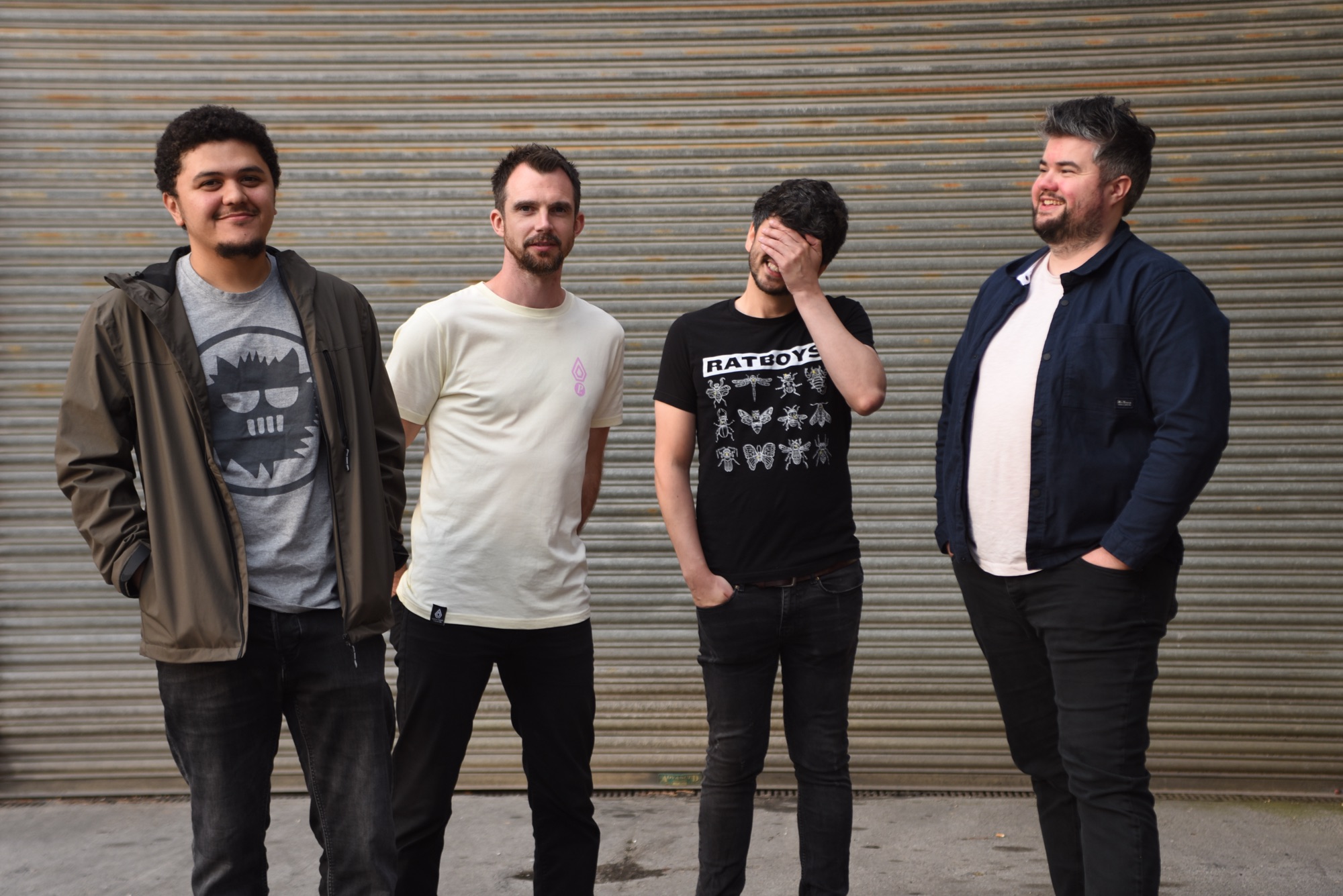
There’s four of us.
Jacob Keating is on lead guitar, but he plays it in such a tender way. He says that his biggest influence in terms of playing lead guitar is Buck Meek from Big Thief, which I massively hear. And Jacob’s great on his own as well as well, he has a solo project called Metalwork as Poetry. He does the odd show and has a bandcamp album out that I’d recommend checking out. His songs always make me tear up.
And then there’s Mila Henderson-Gill who plays the fiddle. They were the one that I started jamming with. They are such a talented musician. They can just rock up on the day without practicing on basically any instrument and play the most amazing thing you’ve ever heard and then just shrugs it off like it was nothing. I don’t know how they do it. And also they’re really lovely as well.
And then Albert Chinn plays the cello – Albert too is so talented, he plays loads of instruments and did a bunch of different ones on this album. He plays the tuba on one song. The things Albert plays feel like they tie everything else together, which is such a difficult skill.
It’s been such a pleasure to play with them. There’s such a grounded atmosphere when we practice, we are all very present with eachother. We drink herbal tea at our practices, not beer. My housemate told me “you guys look like a chess club” when we first started playing together.
Q. So is it important to you to have kind of fairly traditional folk instruments in there or is that something that just happened?
A. It formed really organically, it wasn’t really about looking for specific instruments, it was more that we just wanted to play together.
It’s an interesting sound because the frequency ranges between all the instruments isn’t actually that far away from each other. But it means sometimes it takes up this wall of sound effect, which sounds cool.
Q. Just thinking about the single that’s out, who’s on that?
A. So that’s just me and Mila.
We recorded that about a year ago when it was only me and Mila playing together. Mila absolutely loves trad folk and you can hear this a lot on the song.
I was really swept up in this ‘folk revival’ going on at the moment. I say this with inverted commas because folk music is basically always popular, and always will be. But there’s been a bit of a surge of bands in the last few years like Lankum, Shovel Dance Collective, Lisa O’neill and people like this who’s music has had a really big influence on me.
I’d also been going to a few folk nights around Leeds too. The sorts of melodies and chord progressions you can hear at these, they start to seep in. I feel like they really came out when I was writing Snail.
Q. How would describe the song and the inspiration that went into it?
A. It’s a very earnest, tender love song. I wanted it to have quite simple and familiar emotions in it, ones like just missing someone you love. I wanted it to be unclear about whether it’s a platonic or romantic love. I believe the world would be a better place if we treated platonic relationships with the reverence with which we treat romantic ones.
And also the title, ‘The Snail with Cat’s Ears’ is an image from medieval marginalia. I like to throw things in to contort the feelings I’m expressing, because the world is really strange so it feels natural to do this. I also think there’s something inherently queer about mediaeval marginalia, which is part of why I wanted to put that image in there too.
Medieval Marginalia brings me a lot of comfort because it reminds me that there have been people who are strange and different all throughout history, and reminds me that what is sacred often lies in the margins of life, off the beaten track.
Q. Given all of this, we know something album shaped is on the way, where do you want to perform in Leeds next?
A. I think we just want to keep playing at Brudenell to be honest. I can’t really imagine doing shows bigger than that. It was a dream of ours to play at Brude, and I didn’t think we’d ever get to, so I was so grateful when they got in touch. Brude is a sacred place.
Q. And finally, what song do you wish you wrote?
A. Definitely Angels by Robbie Williams. It always comes back to that song.
Interview from William Hatfield – @wrh.2001

Leave a Reply